Wednesday, June 26, 2013

Social Media Intern Blog 5: 5 Tips for Healthy Self-Promotion


5 Tips for Healthy Self-Promotion
By Annabelle Trokey
Posted: May 14, 2013
FoundHealth, Inc. Blog
http://www.foundhealth.com/blog/?p=2370

Today, bragging is becoming a greater norm. Social media foster bragging by providing a microphone for all of us to share the things that are important to us and get attention for it. 

With all of the social networks available to blast your good deeds and success stories, when is it appropriate to talk about yourself in a positive way? Should we all feel the guilt of social cost when sending a post about our accomplishments? 

No way!

There is a fine line of health in the center of narcissism and humility that has become a social norm in recent years - learn how to walk it!


What does Bad Bragging look like? “Bragging can leave a positive first impression”, says Simine Vazire, associate professor in personality science in psychology at Washington University in St. Louis, “but it is inappropriate to brag to close friends.” She explains that our close friends are included in our “ups” and “downs” and bragging is annoying in the sense that it provides a false-truth about who the person is. The tendency of the bragger is to paint a one-sided picture about their lives that leaves an impression that they are dishonest. Close friends and family members already know that our lives are not perfect, so it doesn’t make any sense to paint it that way. Social media has the tendency to amplify this effect by providing only snapshots of what people are doing – whether its 140 characters on Twitter, photos on Facebook and Twitter, or punchy two-liners about job experiences on LinkedIn. According to Benoit Monin, professor of psychology and organizational behavior at Stanford University, social media can lead to feelings of resentment due to guilt perceived by the braggers audience. Monin gives the example of the bragger posting on Facebook how “green, vegan, or environmentally concerned” they are in a way that can be perceived as implied judgment. No one likes to be judged and braggers often brag vs. taking a position on a topic! The result is that the audience feels threatened by the implied judgment and they also feel guilty feeling as if they are not doing enough. This type of bragging causes resentment between the bragger and the audience causing a social loss over time. Good Bragging = Positive Self-Promotion

The opposite extreme includes the overly humble. Those who fear using positive self-promotion because they do not want to be judged as braggers and do not want to feel narcissistic. By being so afraid that self-promotion will cause others not to like them diffident individuals often lose out on gaining admiration and respect for the things they should be proud of. Positive Self-Promotion or “Positive Psychology” has been proven to have a dopamine affect, giving modest individuals a better feeling about him or herself - a better self-esteem. Used in the right context, positive self-promotion can help calm feelings of inadequacy without costing us our friendships! However, displaying that you are proud and should be recognized takes some artistry. Unlike braggadocios self-talk, positive self-promotion remains humble using positive self-talk as a form of marketing and branding, or as a way to generally get to know others. In essence, it is okay to be proud of and liked for being yourself!


  5 Tips for Healthy Self-Promotion 
    1. Promote yourself by bragging in context- Results are not enough! Paint the entire picture, share the ups and downs so others can be proud of your accomplishments by knowing the journey it took to get the results you are proud of.
    2. Don’t brag about things everyone else struggles with- This alienates others! Instead promote things that will motivate others and include them in your accomplishments so that they too can be proud of you!
    3. Tell the story- Start with the vulnerability and finish with what you are proud of and what you have accomplished. It is interesting to hear about how others accomplish things in their life especially when they persevere through calamity.
    4. Be credible! Tell the truth about yourself. Don’t say you created the top number of sales at work when you are at the bottom. Say you moved from the bottom to the middle and it was a journey! It speaks more about your character to portray yourself in a relatable way.
    5. Learn to accept compliments and criticism. Be aware of how others are reacting to you. Do they interact? Are they defensive? Are you losing friends or motivating others by creating stronger bonds through sharing your experiences?

Social Media Intern Blog 4: Sa Ta Na Ma to Cure Alzheimer's?


Sa Ta Na Ma to Cure Alzheimer's?
By Annabelle Trokey
Posted: April 16, 2013
FoundHealth, Inc. Blog
http://www.foundhealth.com/blog/?p=2331

What is Sa Na Ma Ta?

It's Kirtan Kriya Meditation! And, recent studies show that a little sa na ma ta can help strengthen the mind!

How has Kirtan Kriya helped those with Alzheimer's?


"The reason an integrated medical program works is simple: the brain is flesh and blood, just like the rest of the body. Like your heart or any other part of your body, your brain requires the proper nutrition, blood flow, and energy to perform well. Simply put, “What works for the heart, works for the head”-Dr. Khalsa

The Study: Following studies, which found the Kirtan Kriya meditation program to increase cognitive function and cerebral blood flow, a study was conducted to test the integrative meditational medicine on those with Alzheimer’s and memory loss. The study on Kirtan Kriya measured the results of the meditative practice over an 8-week study testing variations in the stress, sleep, mood, and anxiety of 15 subjects with memory loss in the median age range of 62±7 years old and their caregivers.

The Method: In order to test the results of Kirtan Kriya the research team in conjunction with the Alzheimer’s Research and Prevention Foundation in Tucson, AZ prepared preliminary and post-study testing including neuropsychological tests, photon emission scans, and measures for mood, anxiety, and spirituality. "Major outcomes included measures of perceived stress (Perceived Stress Scale), sleep (General Sleep Disturbance Scale), mood (Profile of Mood States), memory functioning (Memory Functioning Questionnaire), and blood pressure."

The Results: The 8-week study produced positive results! Subjects spending 12 minutes a day meditating with Kirtan Kriya were found to have "positive changes in mood, anxiety, and other neuropsychological parameters, and these changes correlated with changes in cerebral blood flow." See the study

The study also observed, "an improvement across measures of mental health and cognitive functioning, psychological distress, and telomerase activity in caregivers performing daily Kirtan Kriya compared with the relaxation group." Read more. 

Is Integrative Medicine a Good Approach to Alzheimer's?


According to Dharma Singh Khalsa, MD, Integrative Medicine techniques like Kirtan Kriya and other meditation techniques help to cure memory loss that could be related to stress, cognitive decline, or due to mild cognitive impairment (MCI). MCI is a specific type of memory loss that is, in fact, a precursor to Alzheimer’s disease."  Dr. Khalsa creates a vivid picture of integrative medicine by asking us “to imagine two rivers: a river on the left as conventional medicine, including drugs and surgery, and a river on the right as alternative, or complementary, medicine, consisting primarily of treatments people can apply themselves."

In seeking methods to apply for yourself, Dr Khalsa suggests examples of alternative or complementary medicine including "nutrition, supplements, stress-management techniques such as yoga and meditation, and exercise." Learn more from Dr. Khalsa on Preserving Memory As We Age

Although Dr. Khalsa does not suggest that Kirtan Kriya is a cure for Alzheimer's, based on the positive results of Kirtan Kriya producing positive changes in stress, sleep, mood, anxiety, and changes cerebral blood flow Kirtan Kriya can be used to remedy some of the symptoms of Alzheimer's as well as used to aid in overall brain health!

How to do Kirtan Kriya Meditation


Step 1: Sit straight with your mental energy focused on the area of your brow, or forebrain. "Yogis believe that this stimulates your pituitary. You can find this spot by rolling your eyes to the top, or root of your nose." Sa Ta Na Ma is pronounced with a soft a, or ah sound  "Sa-ah, Ta-ah, Na-ah, Ma-ah."

Step 2: Repeat the chant Sa Ta Na Ma out loud in your normal tone of voice while using the correlating finger positions for two minutes.

Step 3: Repeat the chant Sa Ta Na Ma using the correlating finger positions for two minutes using a wisper.

Step 4: Repeat the chant Sa Ta Na Ma for four minutes chanting while still touching fingertips.

Now, reverse the order.

Step 5: Chant Sa Ta Na Ma for four minutes using the correlating hand gestures.

Step 6: Repeat the chant Sa Ta Na Ma using the correlating finger positions for two minutes using a wisper.

Step 7: Repeat the chant Sa Ta Na Ma out loud in your normal tone of voice while using the correlating finger positions for two minutes.

The finger position or "mudra" is an integral part of Kirtan Kriya. On sa, touch the index fingers of each hand to your thumbs. On ta, touch your middle fingers to your thumbs.  On na, touch your ring fingers to your thumbs. On ma, touch your little fingers to your thumbs. Learn more on technique.

Step 8: At the end, inhale deeply, stretch your hands above your head, and exhale!

Use Kirtan Kriya to improve your cognitive health whether you are of a healthy mind or using integrative medicine to help remedy the affects of  Alzheimer's.  Enjoy the benefits of reduced stress, quality sleep, a better mood, &  less anxiety! Enjoy the benefits of FoundHealth!

Need a guide? Follow Guruka Singh through Kirtan Kriya in this video! 


Social Media Intern Blog 3: Sneak Peak: 3 Recipes from Dr. Hyman's Blood Sugar Solution Cookbook


Sneak Peak: 3 Recipes from Dr. Hyman's Blood Sugar Solution Cookbook
By Annabelle Trokey
Posted: April 9, 2013
FoundHealth, Inc. Blog
http://www.foundhealth.com/blog/?p=2293

My Overall Thoughts on The Blood Sugar Solution Cookbook

Dr. Hyman’s cookbook includes a healthy assortment of breakfasts, snacks, soups, salads, and even burgers and deserts! The recipes are influenced by global cooking influences including Indian Curries, Mexican Lasagnas, and Brazilian Bean Soup, & Texas-Style Chili! Right off the bat one of the best things I noticed about the recipes in The Blood Sugar Solution Cookbook is Dr. Mark Hyman’s catchy recipe titles. One that really stood out to me is “The Healthiest Breakfast in the World” which after reading I thought to myself, “I have to try that!” And, in my opinion, that is exactly what you want from a cookbook, a little intrigue of the taste buds! Knowing that, you might find it valuable to know that Dr. Hyman’s recipes are completely readable and actionable. Not only is grocery shopping easy because it lists all of the recipe items and necessary proportions in cups, tablespoons, or teaspoons, the ingredients are also easy to find. For the three recipes I have chosen for your sneak peak, I was able to complete my shopping between Trader Joe’s, Safeway, and Harvest House (the local health food store). I am sure we have all tried a few cookbooks that caused us to have cookbook phobia. You know the kind I am talking about, the ones that take a degree in culinary arts to decipher! Well I am happy to tell you that Dr. Hyman seemed to have considered the newbie chef when creating The Blood Sugar Solution Cookbook providing easy to follow step-by-step instructions and techniques in the cookbook. In addition to exciting titles and easy to follow step-by-step instructions, Dr. Mark Hyman includes exciting descriptions for each recipe telling you why the ingredients you are forming together are good for your health.  In addition, The Blood Sugar Solution Cookbook also includes a nutritional analysis, serving size, prep time, cooking/chill time, cooking level, and budget indicator for each recipe. Basically, there are no hidden secrets! When you choose to cook a recipe from Dr. Mark Hyman’s The Blood Sugar Solution Cookbook you know what time frame and skill set is required, what ingredients you need, and the impact that the healthy ingredients will have on your health. 3 Excellent Recipes from The Blood Sugar Solution Cookbook 

1. Cashew “Cheese”

“It satisfies your cheesy, salty cravings and has wonderful fat protein and carbohydrates. It is good for your body and good for your soul.”

–Dr. Mark Hyman

Ingredients


Why should you try it?

Tree nuts (including Cashews) are high in energy! Tree nuts are rich sources of vegetable protein, monounsaturated fatty acids polyunsaturated fatty acids, dietary fiber, vitamins E and K, folate, magnesium, copper, selenium, and potassium.” And,  “tree nuts are low in saturated fatty acids and sodium. “ Tree nuts have been shown to be associated with a wide range of health benefits, including “reduced levels of coronary heart disease, hypertension, type 2 diabetes, and obesity.” In 2003, the Federal Food and Drug Administration released the first qualified health claim for nuts stating; “Scientific evidence suggests that eating 1.5 ounces per day of most nuts [such as cashews], as part of a diet low in saturated fat and cholesterol, may reduce the risk of heart disease.” Learn more about the study and the health benefits of cashews.

What is in Dr. Hyman’s Cashew “Cheese”?

Soaked raw cashews are blended with probiotic powder and water. The blended cashew mixture is then mixed with fresh basil, parsley, tarragon, lemon juice, nutritional yeast, and salt & pepper to taste.


NUTRITIONAL ANALYSIS: Per Serving (2 tablespoons):
Calories 141 calories
Fat 11g
Saturated Fat 2g
Cholesterol 0mg
Fiber 1g
Protein 4g
Carbohydrate 9g
Sodium 300mg 

Like the Cashew “Cheese”? You may also like—The Blood Sugar Solution Cookbook’s DELUXE GUACAMOLE

2. Sweet Potato Burgers

“Almond flour, beans, and sweet potatoes together create a low-glycemic yet delicious burger, which can be enjoyed with a salad.”

–Dr. Mark Hyman

Ingredients 

Why should you try it?

Sweet potatoes are healthy! “The sweet potato contains many nutrients including protein, carbohydrates, minerals (calcium, iron, and potassium), carotenoids, dietary fiber, vitamins (especially C, folate and B6), very little fat, and sodium.” Not only is sweet potato a great burger substitute, it is also used as “supplement to corn, rice, or wheat or as the main ingredient of traditional dishes consumed in many developing countries.” Learn more about the nutritional benefits of the sweet potato.

What is in a Dr. Hyman Sweet Potato Burger?

     One large baked sweet potato is mashed with cooked cannellini beans and then spiced with your favorite spice, such as Cajun or curry powder, cayanne pepper, and salt and pepper to taste.  The mixture is combined with almond flour to form patties that are cooked over a cast-iron pan until crispy and golden-brown. The patties are served on a bed of lettuce drizzled with a lemon, garlic, and tahini dressing.

NUTRITIONALANALYSIS: Per Serving (1 Burger):
Calories 143 calories
Fat 5g
Saturated Fat 0g
Cholesterol 0mg
Fiber 6g
Protein 7g
Carbohydrate 20g
Sodium 192mg

Like the Sweet Potato? You may also like—The Blood Sugar Solution Cookbook’s RASPBERRY PISTACHIO-CRUSTED CHICKEN WITH STEAMED KALE AND WILD RICE!

3. Chocolate Chia Seed Pudding

“Coconut, cacao, cayenne, and chia are all powerful superfoods that not only taste good but also reduce inflammation, help improve metabolism, and pro- vide a rich source of omega-3 fats.”

–Dr. Mark Hyman

 Ingredients 

Why should you try it?

It could make you run all day! In chia's previous, more glorious existence, it served as the power food of the ancient Aztec civilization. They called chia their "running food" because messengers reportedly could run all day on just a handful. “The Aztecs prized chia more highly than gold.” Scientists investigating chia since the 1990s have found the grain surprisingly nutritious and “superior in protein quality to wheat, corn, rice, oats, barley, amaranth and soy.” Chia also offers a disease-fighting arsenal of antioxidants, including “chlorogenic acid, caffeic acid, myricetin, quercetin and flavonols,” as well as an abundance of omega-3 fatty acid! In one six-month study type 2 diabetes patients, conducted by Dr. Vladimir Vuksan, a pioneer of the functional foods movement in Europe and one of the developers of the revolutionary glycemic index at the University of Toronto, “researchers found impressive health effects from eating Salba (a commercial variety of chia) daily. In patients who already were on diets or medication to control their disease, Salba lowered systolic blood pressure by 10 and diastolic by 5mm mercury. It also reduced c-reactive protein (CRP) levels by 32% and lowered fibrinolytic (blood thickening) factors, which can trigger cardiovascular disease.” See the study.

What is in Dr. Hyman’s Chocolate Chia Seed Pudding?

     Cacao, vanilla, cayenne pepper, and salt are combined with coconut milk, chia seeds, and extra-virgin coconut oil and mixed thoroughly. After being chilled, the pudding is served with a garnish of fresh blueberries. NUTRITIONALANALYSIS: Per Serving (1/2 cup):
Calories 226 calories
Fat 22g
Saturated Fat 15g
Cholesterol 0mg
Fiber 8g
Protein 14g
Carbohydrate 11g
Sodium 88mg

Like the Chocolate Chia Seed Pudding? You may also like—The Blood Sugar Solution Cookbook’s PINK POM POM!    Check out Dr. Hyman's Blood Sugar Solution Cookbook & don't forget to share your experiences and comments below!

Social Media Intern Blog 2: The Daily Health Kit - Essential Items for Physical and Mental Health


The Daily Health Kit - Essential Items for Physical and Mental Health
By Annabelle Trokey
Posted: March 31, 2013
FoundHealth, Inc. Blog
http://www.foundhealth.com/blog/?p=2261

The Daily Health Kit -

Essential Items for Physical and Mental Health   

Sometimes the simplest lifestyle changes bring the greatest health results. The things we do consistently affect every aspect of our bodies and how they are able to function for us. At FoundHealth we believe that health comes from empowering people to find integrative solutions to their specific health needs.

What is the Daily Health Kit?

 This list does not include a daily list for those facing major challenges, like “Quit Smoking”.   Instead, this list includes a list of tried and true health necessities that the healthy have been using daily for lifetimes. The FoundHealth Daily Health Kit focuses on the essential daily ingredients for a healthy diet, level of hygiene, and mental health.

What does the Daily Health Kit include?

What does the Daily Health Kit do for my  daily health? 

1. Prepares the Foundation for a Healthy Diet 
  • Breakfast: Breakfast has often been said to be the most important meal of the day, and science agrees. However, not all breakfasts are created equally.  A study conducted in 2003 showed that subjects who ate ready-to-eat cereal, cooked cereal, or quick breads for breakfast has significantly lower BMI when compared to breakfast skippers or meat and egg eaters. Of the groups collected, meat and egg eaters had the highest BMI. Check out this great chart that correlates ‘breakfast type’ to average BMI.  See the study. 
  
  • Superfoods: Superfoods are super sources of anti-oxidants and essential nutrients that are found in nature and highly nutrient without being highly caloric. Chia Seeds are one of the most renowned super foods around. In a 2009 study, Chia Seeds were fed to murine subjects for 3 months, and the results showed an improvement of glucose maintenance and a decrease in stomach fat. See the study.
  [caption id="attachment_2263" align="aligncenter" width="234" caption="A study showed Chia seeds can help maintain glucose levels and reduce visceral adipose. "][/caption]
  • Vitamin & Mineral Supplements: A healthy daily diet does not always offer every vitamin and nutrient we need. Vitamins help us to fill the gap between our diet and our vitamin and mineral needs.  Of course, which ones you will include in your health kit will be specific to your needs.  Most will include a daily multivitamin & Vitamin D. Ask your doctor to assess your specific need for vitamin and mineral supplements.

2. Sets the Standard for Basic Healthy Hygiene
  • Soap and alcohol based hand sanitizer: Not only does hand sanitizer help your own health, but it also helps the people around you stay healthy. In a study on the effectiveness of hand sanitizer amongst 15 elementary schools (6000+ students) over a 3 month period, absenteeism of students using hand sanitizer decreased 19.8% when compared with students who didn’t use it. In addition, teacher absenteeism went down by 10.1%. See the study.
  • Floss and a Toothbrush:  In case knowing that brushing your pearly whites and flossing your gums help you to avoid painful toothaches, bad breath, and tooth loss. We hope that you are further motivate to brush & floss due to the impact that the health of your gums and teeth have on your health when it comes to mouth disease, heart disease, and stroke. And, according to Dr. Michael F. Roizen, in his book Real Age, flossing may add over six years to your lifespan! 
  • Body soap and shampoo: Not only will you smell cleaner but you will also ward off illness! We have something in common with our reptile friends. According to Dr Donald Novey of the Advocate Medical Group, “you should clean your body and shampoo your hair at regular intervals that work for you.” Your body is constantly shedding skin and that skin needs to come off. Otherwise, it will cake up and can cause illnesses.” Out with the old and in with the new for optimal health! 
3. Supports Life-long Mental Health
  • Mind Puzzles, and New Knowledge: Decrease your likelihood of neurodegenerative disease by practicing new activities and skills such as puzzles to remain mentally sharp. In one study of 101 individuals who were diagnosed with dementia, the 17 participants who reported working on crossword puzzles had their cognitive decline begin 2.85 years prior to diagnosis, while the 84 participants who did not do crossword puzzles had their decline begin 5.43 years prior to diagnosis. This significant difference suggests that crosswords had an impact in slowing the onset of neurodegeneration. See the study.
[caption id="attachment_2276" align="aligncenter" width="223" caption="Crosswords have been shown to slow neural degeneration."][/caption]
  • A Comfy Pillow: Keeping regular hours and getting enough rest during sleep allows your body to rejuvenate and take in all of the healthy nutrients and activates what you provided for it the day before.
  • Tennis Shoes: Exercise helps your body function better through movement. Even a ten-minute daily helps to control weight, combat health conditions and disease, improve your mood, and boost your energy!
 

Have suggestions for other items that should be put into the Daily Health Kit? Share your wisdom by leaving a comment!


Social Media Intern Blog 1: Can the Mediterranean Diet Reduce Your Risk of Heart Disease?


Can the Mediterranean Diet Reduce Your Risk of Heart Disease?
By Annabelle Trokey
Posted: March 7, 2013
FoundHealth, Inc. Blog
http://www.foundhealth.com/blog/?p=2178

Until recently, scientists had loosely attributed the Mediterranean diet to lower rates of heart disease, but had yet to firmly support this assertion with a solid base of evidence. In previous studies, scientists and medical doctors were unable to tell whether it was the Mediterranean diet that was having the heart helping impact, or whether it was the prescribed drugs that subjects were taking in parallel. About five years ago, a set of scientists decided to test the Mediterranean diet once and for all by conducting a large and long-term study. The results recently came out, and FoundHealth is here to break it down. Here are the details: The Study: The study included 7,500 patients ranging from 55-80 years old. These subjects were at high risk of heart disease due to various reasons like diabetes, a family history of heart disease, or high blood pressure. The study was conducted over five years. Three groups were created:

- Group 1: Assigned a low-fat diet and given instructions on how to follow it.

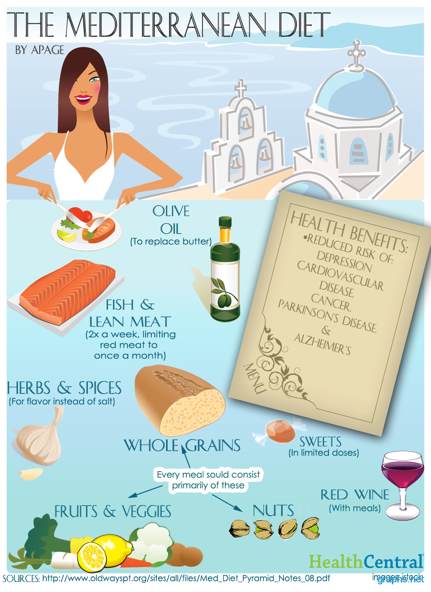
- Group 2: Prescribed the Mediterranean Diet with an extra emphasis on extra-virgin olive oil. They were instructed to use at least four tablespoons per day. 

- Group 3: Designated Mediterranean Diet was an additional combination of walnuts, almonds, and hazelnuts. They were instructed to eat an ounce of the nutty mix per day.

Both groups assigned to the Mediterranean Diet were instructed to eat fish at least three times per week, legumes three times per week, a serving of fruit three times per day, and a serving of vegetables two times per day. They were also instructed to eat white meat instead of red, and also had the option to drink up to seven glasses of wine per week with meals. They were instructed to remove from their diet commercially made cookies, cakes, and pastries, and to limit their consumption of dairy products and processed meats. [caption id="attachment_2180" align="aligncenter" width="578" caption="Recommendations for the Mediterranean & Low Fat Diets"][/caption] The Results: After approximately five years, researchers found that the Mediterranean diet cut the risk of heart attacks, strokes, and deaths from heart disease by 30 percent. Researchers also concluded that those who ate the Mediterranean diet were less likely to die overall in the five years compared to the control group. Overall, scientists counted 109 heart attacks, strokes or deaths from heart disease in the control group, which did not eat the Mediterranean diet.  Reflecting on the study, Dr. Estruch said he thought the effect of the Mediterranean diet was due to the diet as a whole, not just the olive oil or nuts, and that he did not expect to see results within five years.  The significance of the study is emphasized by the size, length, and controlled nature of the study.  “And the really important thing — the coolest thing — is that they used very meaningful endpoints. They did not look at risk factors like cholesterol or hypertension or weight. They looked at heart attacks and strokes and death. At the end of the day, that is what really matters,” said Rachel Johnson, professor of nutrition at the University of Vermont and a spokeswoman for the American Heart Association. “Even the best available drugs, like statins, reduce heart disease by about 25 percent, which is in the same ballpark as the Mediterranean diet,” said Dr. Walter Willett, professor of epidemiology and nutrition at the Harvard School of Public Health. “As a doctor it is easier to say take a pill,” Estruch added. “But diet is a very powerful effect in protecting against cardiovascular disease.” What Does This Mean for YOU? The evidence is clear that the Mediterranean diet is a great choice for those who are health conscious. So now the ball is in your court – Are you ready to take your diet on a Mediterranean excursion? In case you needed any more convincing, take a look at the health benefits:
  • Longer lifespan
  • Lower risk of dying at any age
  • Lower risk of dying from heart disease
  • Lower risk of dying from cancer
  • Lower risk of developing Type 2 diabetes
  • Lower risk of hypertension (high blood pressure)
  • Lower risk of raised cholesterol levels
  • Lower risk of becoming obese
  • Lower risk of developing Alzheimer's disease
  • Lower risk of developing Parkinson's disease
So what are you waiting for?! Get started! Good luck! Learn more about the Mediterranean Diet. Do you already incorporate Mediterranean foods into your diet? Tell us how it works for you! Leave a comment!